
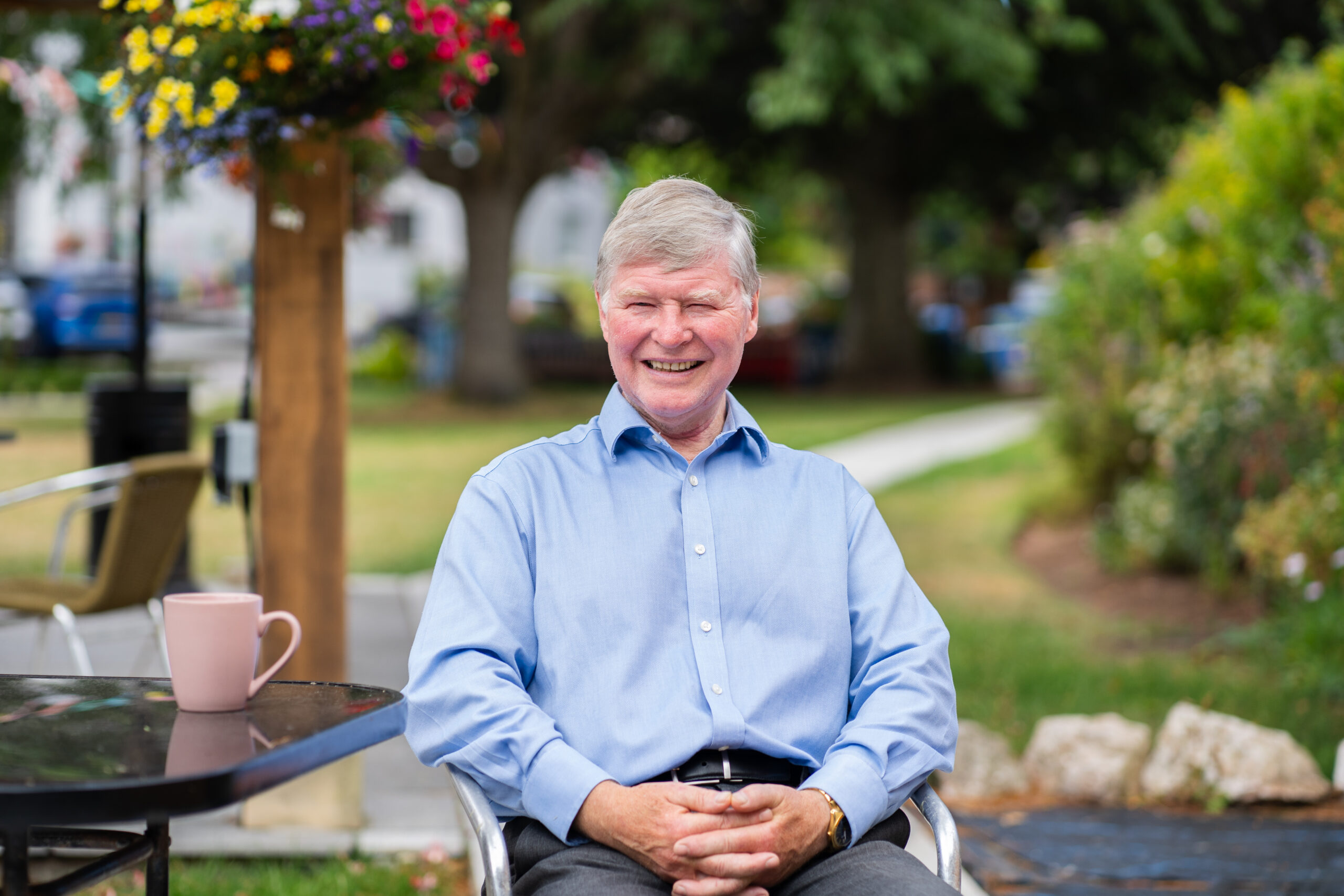
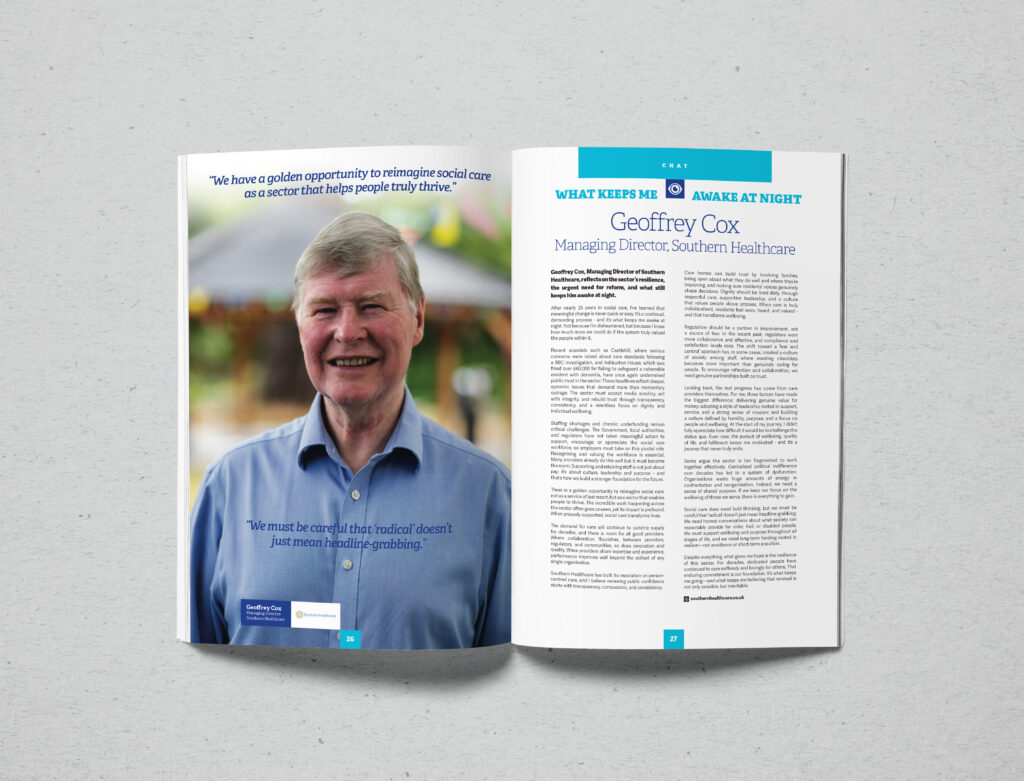
In Care Talk’s winter issue 2025, Geoffrey Cox, Managing Director of Southern Healthcare, reflects on the sector’s resilience, the urgent need for reform, and what still keeps him awake at night.
After nearly 25 years in social care, I’ve learned that meaningful change is never quick or easy. It’s a continual, demanding process – and it’s what keeps me awake at night. Not because I’m disheartened, but because I know how much more we could do if the system truly valued the people within it.
Recent scandals such as Castlehill, where serious concerns were raised about care standards following a BBC investigation, and Ashburton House, which was fined over £60,000 for failing to safeguard a vulnerable resident with dementia, have once again undermined public trust in the sector.
These headlines reflect deeper, systemic issues that demand more than momentary outrage. The sector must accept media scrutiny, act with integrity, and rebuild trust through transparency, consistency, and a relentless focus on dignity and individual wellbeing.
Staffing shortages and chronic underfunding remain critical challenges. The Government, local authorities, and regulators have not taken meaningful action to support, encourage, or appreciate the social care workforce, so employers must take on this pivotal role.
Recognising and valuing the workforce is essential. Many providers already do this well but it must become the norm. Supporting and retaining staff is not just about pay; it’s about culture, leadership and purpose – and that’s how we build a stronger foundation for the future.
There is a golden opportunity to reimagine social care, not as a service of last resort, but as a sector that enables people to thrive. The incredible work happening across the sector often goes unseen, yet its impact is profound.
When properly supported, social care transforms lives. The demand for care will continue to outstrip supply for decades, and there is room for all good providers. Where collaboration flourishes, between providers, regulators, and communities, so does innovation and quality. When providers share expertise and experience, performance improves well beyond the skillset of any single organisation.
Southern Healthcare has built its reputation on person-centred care, and I believe renewing public confidence starts with transparency, compassion, and consistency. Care homes can build trust by involving families, being open about what they do well and where they’re improving and making sure residents’ voices genuinely shape decisions.
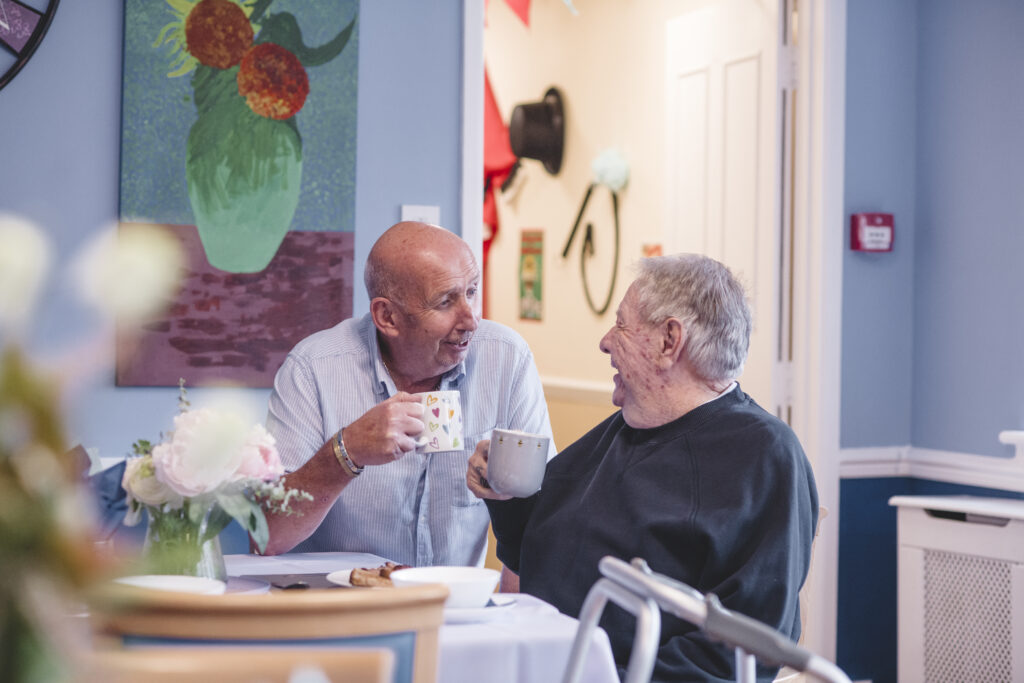
Dignity should be lived daily, through respectful care, supportive leadership, and a culture that values people above process. When care is truly individualised, residents feel seen, heard, and valued – and that transforms wellbeing.
Regulation should be a partner in improvement, not a source of fear. In the recent past, regulators were more collaborative and effective, and compliance and satisfaction levels rose. The shift toward a ‘fear and control’ approach has, in some cases, created a culture of anxiety among staff, where meeting checklists becomes more important than genuinely caring for people. To encourage reflection and collaboration, we need genuine partnerships built on trust.
Looking back, the real progress has come from care providers themselves. For me, three factors have made the biggest difference: delivering genuine value for money; adopting a style of leadership rooted in support, service, and a strong sense of mission; and building a culture defined by humility, purpose, and a focus on people and wellbeing. At the start of my journey, I didn’t fully appreciate how difficult it would be to challenge the status quo. Even now, the pursuit of wellbeing, quality of life, and fulfilment keeps me motivated – and it’s a journey that never truly ends.
Some argue the sector is too fragmented to work together effectively. Centralised political indifference over decades has led to a system of dysfunction. Organisations waste huge amounts of energy in confrontation and reorganisation. Instead, we need a sense of shared purpose. If we keep our focus on the wellbeing of those we serve, there is everything to gain.
Social care does need bold thinking, but we must be careful that ‘radical’ doesn’t just mean headline-grabbing. We need honest conversations about what society can reasonably provide for older, frail, or disabled people. We must support wellbeing and purpose throughout all stages of life, and we need long-term funding rooted in realism—not avoidance or short-term populism.
Despite everything, what gives me hope is the resilience of this sector. For decades, dedicated people have continued to care selflessly and lovingly for others. That enduring commitment is our foundation. It’s what keeps me going—and what keeps me believing that renewal is not only possible, but inevitable.