
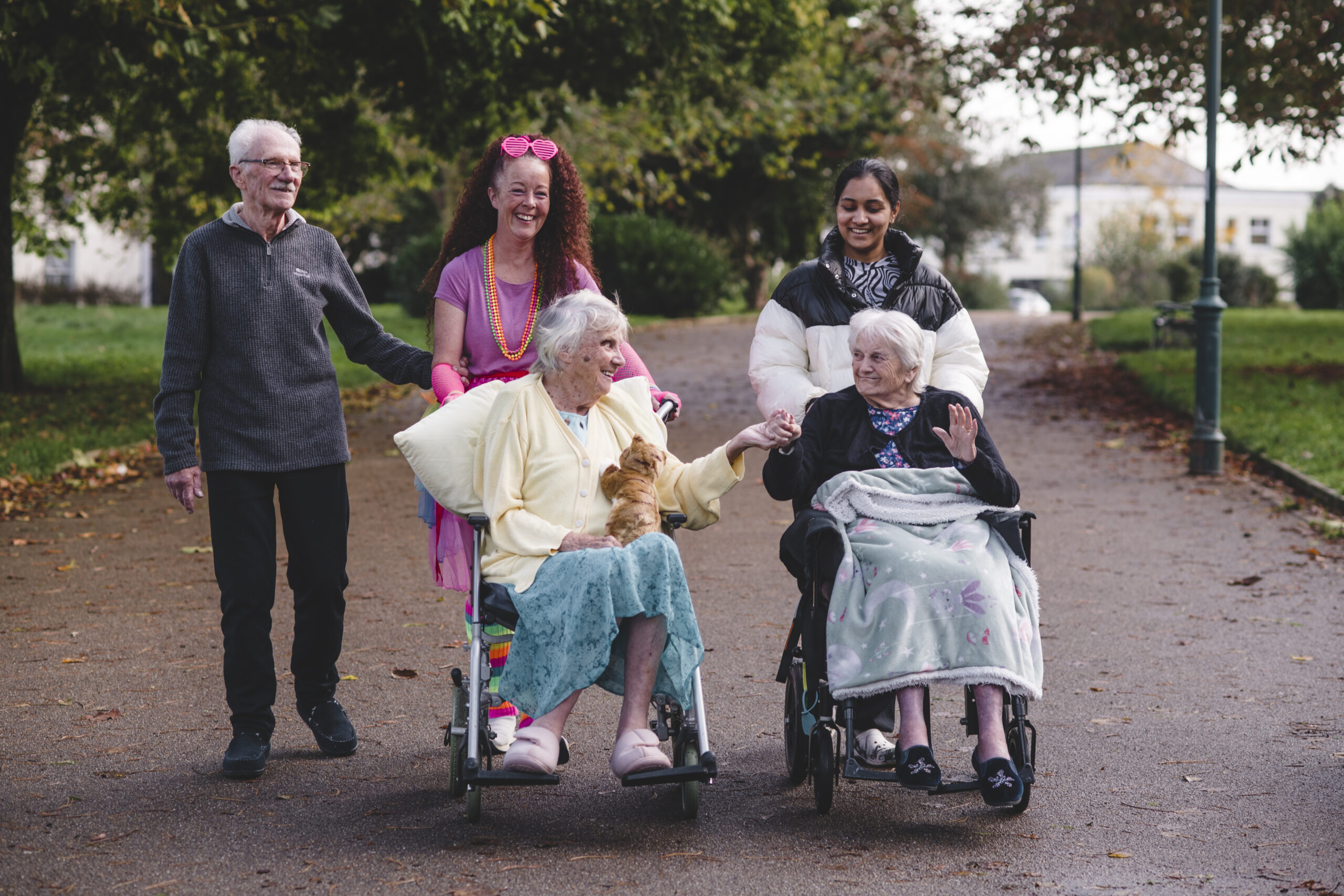
At Southern Healthcare, a large number of our residents are living with a dementia. Our homes in Exeter, Plymouth, Seaton and Dawlish, specialise in dementia care and we are continually striving for further excellence in this field.
For many years, Southern Healthcare has engaged with the work of some of the leading thinkers in research and innovation in the provision of dementia care. We embrace strategies from leading experts, including those developed by highly regarded Professor David Sheard, Joyce Simard and Naomi Feil.
As a result of our continued training (not to mention an occasional invitation to participate in dementia research), we offer a very high standard of person-centred residential dementia care.
Team members in our homes have learned to use dementia care techniques from within the Butterfly Approach, to ensure residents feel loved, happy and supported. Studies have shown that people living with dementia feel happier, calmer and safer when they experience loving companionship, trust and genuinely meaningful interactions with the people around them.
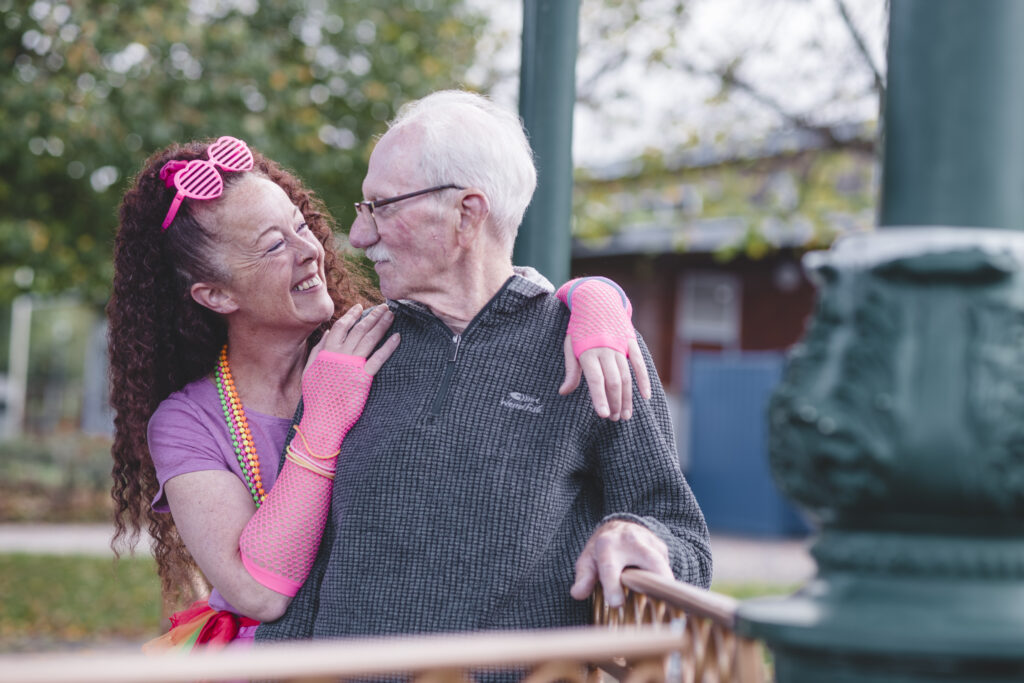
At Southern Healthcare, kindness is at the heart of everything we do. We believe that our residents are happiest when they are listened to, meaningfully occupied and positively supported.
Our managing director Geoffrey Cox is a familiar face in our Homes with 25 years experience in the care sector and has a masters degree in dementia studies. Geoffrey has put together a guide looking at the most frequently asked questions about dementia.
So, whether you are looking for information or guidance, or you are looking for a care home that offers the best dementia care, this guide to frequently asked questions about dementia is for you.
What is dementia?
Very simply put, dementia is a condition with specific decline in cognitive function that impairs daily living. The condition often results in the person living with dementia needing support and care with everyday activities, including self-care. As the condition progresses, this may mean finding suitable 24/7 residential dementia care.
What is the difference between Alzheimer’s disease and dementia?
Dementia is described as a syndrome, or a group of symptoms whereas Alzheimer’s is a specific condition and the leading cause of dementia. Other leading types of dementia are frontotemporal dementia, Lewy body dementia, and vascular dementia. There are many dementias that are much less common, but they can often co-exist.
Dementia is a term used collectively for conditions that affect memory, thinking, and the ability to perform daily activities. Alzheimer’s is the most common form of dementia, and it contributes to between 60 and 70 per cent of all cases.
According to the World Health Organization, there are nearly ten million new cases of dementia every year with women being disproportionality affected, both directly and indirectly (providing 70 per cent of care hours for people living with dementia).
What are the early symptoms of dementia?
One of the early signs of Alzheimer’s disease is forgetting recently learned information. Other early signs of dementia include forgetting important dates or events or repeatedly asking the same questions (perhaps having forgotten they have asked the question already).
People living with dementia often experience changes in their ability to plan, organise, and work with numbers. This can make it difficult to follow a familiar recipe, manage monthly bills, or complete tasks that once felt routine.
It’s also common for individuals with dementia, for example, to have trouble getting to familiar places, creating and following a grocery list, or remembering the rules of a favourite game. These changes can be subtle at first but may gradually interfere with daily life.
The aim of our dementia questions and answers is to help people living with dementia and their families understand what occurs, what to expect and how to maximise a person’s quality of life.
What are the early personality changes in dementia?
One of the frequently asked questions about dementia and it’s progressions is about how a loved ones personality will change. Early behavioural or personality changes can be subtle and gradual, often noticeable first to close family and friends. When these changes are persistent or concerning, it’s then important to speak with a GP or specialist regarding an assessment.
A person’s personality and behaviour can change with dementia and may show up before or alongside memory and thinking problems. These changes are caused by how dementia affects the brain’s emotional and social processing areas.
Common early personality changes in dementia may include:
- Becoming more withdrawn or less interested in people and activities
- Increased anxiety, irritability or mood swings
- Becoming more impatient or agitated
- Loss of patience or reduced emotional control
- Changes in social behaviour and judgment
- Becoming less motivated or apathetic
These changes vary enormously depending on the type of dementia and the part of the brain affected and it’s important to be aware that skilled support can lessen the impact of these.
How common is Alzheimer’s disease?
Globally, 50 million people are estimated to live with dementia with up to 70 per cent of these cases being caused by Alzheimer’s disease. Dementia is a general term that describes symptoms resulting from mental decline that are severe enough to interfere with normal everyday activities and functioning. In contrast, Alzheimer’s is a specific form of dementia.
How is dementia diagnosed?
Dementia is diagnosed by a clinical assessment of the person to see if he or she has a decline in cognitive ability and activities of daily living. This is done through cognitive testing and interviews with the family.
Typically, a GP may refer a person experiencing the early signs of dementia to a specialist memory clinic. At the specialist appointment, the diagnosis process usually includes:
- Talking about symptoms including any changes noticed in memory, behaviour, thinking and daily functioning.
- Cognitive and memory tests include structured questions and tasks designed to measure memory, language, orientation, thinking and problem-solving ability.
- Blood tests or other tests may be repeated or added to confirm that symptoms are not caused by other treatable conditions.
- Scans of the brain may be ordered to support the diagnosis and help exclude other health conditions.
It’s important to note that there is no single dementia test. Instead, diagnosis is based on a combination of medical history, cognitive testing, physical and mental assessments, and sometimes imaging.
Early diagnosis may help people to access treatments and support, to understand symptoms and get available help, to plan ahead (legal, financial, choosing the best dementia care), as well as reducing the uncertainty for families and carers.
How can I support someone with dementia?
This is one of the most frequently asked questions about dementia and of course, the answer will vary depending on your relationship with the person living with dementia, what stage their dementia is at and what support they are willing to accept.
It is essential to start by providing emotional support and offering practical support without judgement. Stay patient and calm and actively listen to their feelings and concerns.
Encourage your loved one to continue with activities they enjoy and include them in decisions wherever possible – this helps maintain a sense of purpose and identity. Where necessary you should help with daily tasks like planning, organising, and routine activities, but encourage independence too.
Ensure you communicate clearly and avoid any correcting or arguing; instead, focus on reassurance. This makes it easier for someone with dementia to stay engaged and not withdrawn.
Continuing with social interactions is really important because it reduces loneliness and supports mental health. Caring for someone with dementia can be emotionally and physically demanding, so join support groups and look after yourself too.
- Register with your GP as the person’s supporter
- Join support groups
- Access training, if you wish and look for respite care
What are the stages of dementia?
In the UK, the stages of dementia are typically broken down to mild, moderate and severe, or early, middle and late-stage dementia. The stages reflect how symptoms tend to evolve as the condition progresses and this can help ascertain what support a person living with dementia may need.
It’s natural to worry ‘how will my dementia progress?’ In the early stage, dementia symptoms are often mild and may not be obvious at first, even though they do reflect changes in the brain. Many people remain largely independent, but they or their family members may begin to notice subtle difficulties.
This may include:
- Problems with memory, especially short-term memory. For example, forgetting recent conversations or events.
- Slower thinking or difficulty planning, organising, and making decisions.
- Challenges finding the right words or following conversations.
- Mood changes such as anxiety, low mood, irritability or withdrawal.
- Losing track of time or minor disorientation in familiar places.
It is important to remember that many of us may find it more difficult to remember things and that is often part of natural ageing.
As dementia progresses into the middle stage, symptoms usually become more noticeable and start to affect daily living more significantly. This stage usually lasts the longest and typically requires increasing support. This is often a good time to consider residential dementia care options with care providers who offer a high standard of specialist healthcare in the form of dementia care and support.
Common changes include:
- Worsening memory problems. Some people living with dementia may have difficulty recognising close family or friends.
- Increasing confusion about time, place, or familiar tasks.
- Difficulty communicating (trouble finding words, following or joining conversations).
- Behaviour and personality changes, such as agitation, restlessness, anxiety or suspiciousness, or language
- Repetitive behaviours and disturbed sleep patterns may emerge.
- Increasing need for help with everyday activities like dressing or bathing.
It’s helpful to read frequently asked questions about dementia from credible sources in order to broaden your understanding of what are the stages of dementia? At Southern Healthcare we offer the best dementia care and support in our Homes in Dawlish, Exeter, Plymouth and Seaton.
During a late (advanced) stage of dementia, symptoms are very pronounced and have a major impact on all aspects of life. People at this stage usually benefit from full-time support and care.
Typical late-stage features include:
- Severe memory loss and confusion. People living with dementia are often unable to recognise loved ones.
- Inability to communicate clearly
- Reduced mobility
- Agitation, withdrawn behaviour, even hallucinations or delusions.
- Difficulty eating, swallowing, and maintaining weight.
At what stage of dementia should you consider a care home?
At Southern Healthcare we aim to make our Homes really homely, rather than just ‘places of care’. The stimulating, supportive and loving environment provided by each of our Homes can make a huge difference to someone living with dementia and their families, especially when they might otherwise be in isolation at home or with family carers who may be struggling to meet the complex needs of their loved one.
Recognising the signs that it’s time to explore residential dementia homes can help you make a well-informed and compassionate decision. Here are some symptoms which indicate it’s time to consider residential dementia care:
- Daily tasks are no longer manageable. If your loved one is unable to eat, dress, or wash without support, this is a sign that additional care is needed.
- Wellbeing at home becomes a concern. If you or your loved is experiencing mobility issues, difficulty using stairs or requires support at night (making home life challenging).
- The primary carer can no longer continue. If something happens to the main caregiver – for example, illness, injury, or burnout – it may no longer be possible to continue care at home.
- Complex medical needs develop. A hospital stay or a new health issue may result in your loved one needing 24-hour care or support that just cannot be provided at home.
- As dementia progresses, family members often feel overwhelmed and, even with the best intentions, full-time caring can become very emotionally and physically draining. This can put undue pressure on a loved one’s health and wellbeing. At this stage, considering residential dementia care can be the best choice.
Does dementia require nursing care?
People living with dementia do not always require nursing care, but as symptoms progress their need for support increases and can often lead to residential dementia care in a nursing home.
Nursing homes can help ensure the safety of people living with dementia (as well as other conditions), as well as assisting with personal care (washing, dressing, toileting), medication management, and complex medical needs.
At Southern Healthcare, each of our Homes offers individualised nursing care of the very highest standards, from specialist dementia support, nursing and palliative care, all provided with deep love, respect and kindness.
Our highly skilled teams and nurses are at the heart of our Homes, offering expert attention 24 hours a day. Working as part of a dedicated multidisciplinary team, they collaborate closely with doctors, therapists, families, and loved ones to ensure every resident receives seamless, personalised care.
Is there a cure for Alzheimer’s disease or dementia?
Unfortunately, there is currently no cure for Alzheimer’s disease or any type of dementia. Dementia is caused by a range of brain diseases, and while research is ongoing, no treatment exists today that can completely stop, reverse or cure these diseases.
There are medications that can help manage symptoms for some people by enhancing memory or thinking in the short term. It’s best to speak to your GP about what medications are available for you or your loved one’s specific dementia. This being said, some of the more recent advanced medications may not be available on the NHS.
Non-drug approaches (like cognitive stimulation therapy and support with daily living skills) can also help people live life well for longer. At Southern Healthcare the wellbeing of our residents is at the heart of everything we do. We want our residents to live enriched lives full of purpose and meaningful connection.
A Checklist For Choosing A Home
It is essential to look at as many care settings as possible before deciding on a home for your loved one. Here’s a checklist of what we at Southern Healthcare know is important:
- The Home should feel like ‘home’ not like a hotel. Remember your loved one is living there, so you want them to feel truly comfortable and supported.
- The team and the residents should feel more like family rather than colleagues or peers.
- Interactions between the team and residents should be affectionate, kind and sensitive.
- People’s happiness should be apparent. The team members and residents should (typically) be happy and feel like an important part of their community.
- Choose a Home where there is plenty of fun in the morning, afternoon and evening, seven days a week: whether it’s through shared activities or in the interactions between residents and the team.
- Make sure the team is fully employed by the Home (no agency staff), as familiarity with the residents, along with proper experience and training, is essential.
- Ensure the Home goes beyond mandatory training by prioritising continuous professional development, including specialised dementia programmes (e.g. Butterfly), person-centred approaches such as Chrysalis, and culture-focused frameworks like The Eden Alternative philosophy.
- Kind, sensitive and supportive language is used by the team.
- The team maintains close, collaborative relationships, working in partnership with residents, family members, and one another.